

Coventry’s History & Heritage
Having served as the medieval capital and later the engine room of the British motor industry, Coventry is a powerhouse of history that has rebuilt itself into a vibrant cultural hub. Peel back the layers and discover the fascinating history and heritage that awaits.
Early Coventry History
Travel back nearly 2,000 years to the time of the Roman occupation. The Lunt Roman Fort offers a fascinating glimpse into early British history with its partially reconstructed turf and timber buildings. Built around 60 AD, shortly after Boudicca's revolt, the site is unique for featuring the only known Roman Gyrus - a circular training area used by the cavalry. It's a fantastic stop for history buffs looking to explore the area's earliest foundations.
Medieval Secrets and Civic Pride
The medieval heart of Coventry is best explored by finding the architectural survivors hidden amongst the modern city centre.
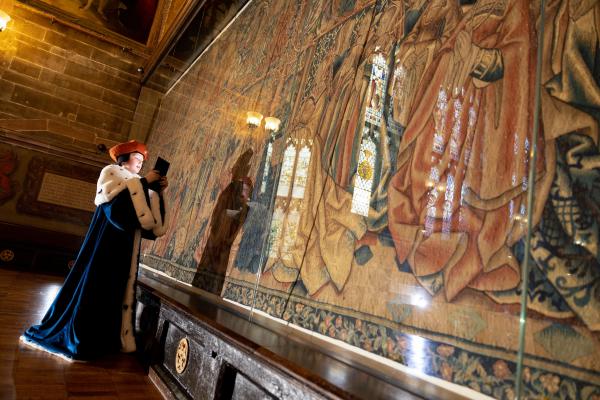
- St Mary’s Guildhall: Prepare to be impressed by one of the finest surviving medieval guildhalls in the country. Known as ‘Coventry's Hidden Gem’, this site has hosted royalty, including Henry VI and Mary, Queen of Scots - her presence often suggested. Step inside to see the stunning medieval architecture, beautiful stained glass, and immersive experiences that bring its rich history to life.
St Mary’s Tapestry: While there, be sure to see the magnificent wool and silk tapestry hanging in the Great Hall. Dating from c. 1505–1515 and woven in Flanders, it is widely considered the oldest tapestry still in its original position in Britain. It is a massive piece of Renaissance art, depicting the Assumption of the Virgin Mary and featuring figures believed to be King Henry VI and Queen Margaret of Anjou, reflecting the city’s close ties to the royal court during the Wars of the Roses.
- Charterhouse: Recently restored and opened to the public, this magnificent 14th-century Carthusian monastery is a testament to the city’s religious heritage. Its grounds and intricate interiors offer a look at life before the Reformation.
- Weavers House: A beautifully preserved timber-framed building that offers a window into the daily lives of 15th-century Coventry citizens, specifically those involved in the city's important weaving trade. A fantastic example of domestic history and heritage.
- Lady Herbert’s Garden: For a moment of quiet reflection, seek out Lady Herbert’s Garden, a charming, sunken sanctuary in the heart of Coventry. The gardens are historically framed by the most important surviving remnants of the medieval city wall: the Swanswell Gate and Cook Street Gate.
- Highlight: The Swanswell Gate itself has been spectacularly reimagined by the Historic Coventry Trust. It is now a unique, pet-friendly holiday accommodation, offering the ultimate heritage experience - you can actually spend the night inside a medieval city gate!
- Medieval Award-Winning Self-Guided Tour: To truly unlock the city’s medieval secrets, follow the footsteps of the past with the "Coventry's Medieval Treasures" tour. The tour uses 'then' and 'now' images to reveal how streets and buildings looked, giving you a real sense of what Coventry was like during the Middle Ages. It also introduces you to the people, from townsfolk to King Henry VI and Queen Margaret of Anjou, and unearths medieval artefacts recently discovered by archaeologists.
The Power of Folklore & Industry
Coventry’s story extends beyond medieval times and wartime. Its iconic legends and groundbreaking industry are just as essential to its culture.
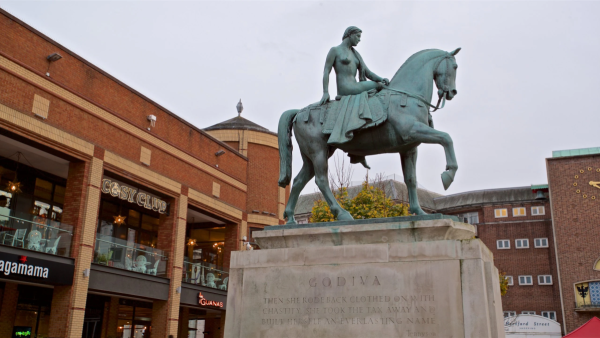
- Lady Godiva Statue & Broadgate: You can’t visit Coventry without getting a photo alongside the iconic statue of Lady Godiva*, forever celebrating the legend of the 11th-century lady and her famous ride. This statue stands proudly in Broadgate, the buzzing heart of the city.
*11th-century Lady Godiva begged her husband, Earl Leofric, to lower the punishing taxes on Coventry. Leofric scoffed, agreeing only if she rode naked through the town. Godiva bravely rode, covered only by her long hair, after commanding the citizens to stay inside. Humbled, Leofric removed the taxes, cementing Godiva as Coventry's symbol of courage and compassion.
- Coventry Transport Museum: A must-see! Discover why Coventry was known as the 'British Detroit.' This world-class museum charts the city’s history as the birthplace of the cycle and motor industry, housing the world's largest collection of British road transport, including the land speed record holders, Thrust SSC and Thrust2.
- The Herbert Art Gallery & Museum: For a complete history lesson, pop into the Herbert. Here you can explore permanent collections on local social history, the impact of the Blitz, and rotating art exhibitions, providing cultural context to all the heritage sites you visit.
Green Escapes and Parks for Reflection (H1)
Take time to appreciate the green spaces that contrast with the city's urban energy.
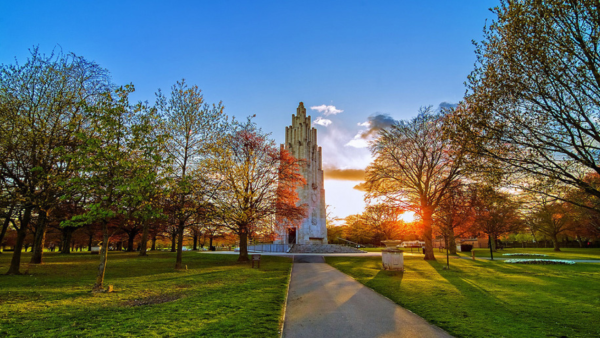
- War Memorial Park: The largest and most popular green space in the city, this park is a fitting memorial to the soldiers of the two World Wars. It's a wonderful place for a walk, a picnic, and reflection at the impressive memorial.
- Coombe Abbey Country Park: A short drive from the centre, this massive 500-acre country park, surrounding the historic abbey grounds, offers woodland, stunning gardens, and tranquil lakeside walks. It’s an essential day trip for nature lovers and history buffs alike, featuring landscape work by the famous Capability Brown. You can also stay at Coombe Abbey Hotel – founded in 1150 AD as the Abbey of Cumbe, a Cistercian monastery that became the largest and most influential in Warwickshire.
The Hooded Monk at Coombe Abbey: Abbot Geoffrey is believed to be the spirit of a monk who was brutally murdered on the abbey grounds in 1345. He was reportedly sent to the monastery by King Edward III to oversee the operations. His killer was never brought to justice. He is often described as a hooded figure wandering the castle grounds, cloisters, and corridors at night, with his face never visible.
- London Road Cemetery: For a beautifully tranquil and historically rich outdoor experience, visit this magnificent Victorian cemetery. It’s an ideal spot for pretty walks, offering stunning landscaping and architecture, including the notable Anglican Chapel.
Faith and Resilience in Coventry
No journey through Coventry's history is complete without a visit to the iconic Coventry Cathedral.
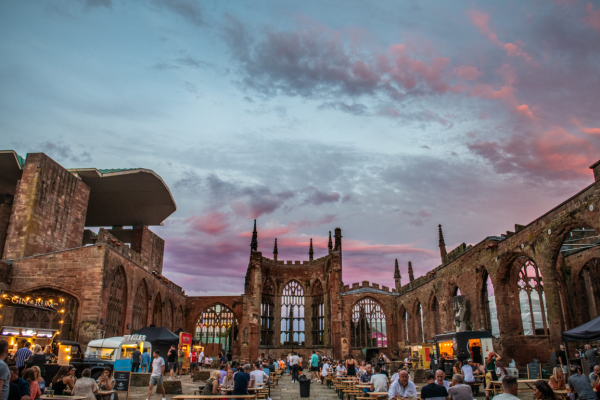
- The Cathedral (Old & New): This is perhaps the most moving architectural site in the UK. The powerful ruins of the original medieval cathedral, destroyed by the 1940 Blitz, stand as a poignant monument. Right next to it, the stunning New Cathedral (designed by Sir Basil Spence) is a modernist masterpiece and a global symbol of peace and reconciliation.
- Holy Trinity Church: Located just across the square, this beautiful parish church survived the bombs and offers another glimpse into medieval faith. It is famously home to the stunning 15th-century Doom Painting, which covers the full chancel arch - a rare and striking piece of religious art that must be seen up close.
Coventry is a city that never stops telling its story. From the resilience forged in the ruins of its Cathedral to the innovation captured in its Transport Museum, the history and heritage here are both vibrant and humbling.
Fancy a pit stop whilst touring Coventry’s history? Visit The Golden Cross Pub – one of Coventry’s oldest, dating back to the 16th century. Part of the pub's cellar reportedly once served as a prison cell, and some ghostly figures seen in this area are believed to be the spirits of unhappy prisoners. Staff and patrons have also reported poltergeist activity, including doors opening and slamming shut, unexplained banging noises, and objects moving on their own.
Whilst you’re visiting, why not discover the vibrant arts & creative venues.