

Coventry is well-known for many iconic and important cultural moments – like it’s British motoring heritage, the Coventry Blitz, 2-Tone music, and the infamous Lady Godiva.
But, tucked away in the rich tapestry of Coventry’s culinary past lies a lesser-known gem of the city’s history: the Coventry God Cake.
With its golden, flaky pastry and spiced fruit filling, this triangular treat is more than just a delicious addition to your morning snack routine – it’s a fascinating window into a wealth of local tradition, folklore, and family.
What is a God Cake?
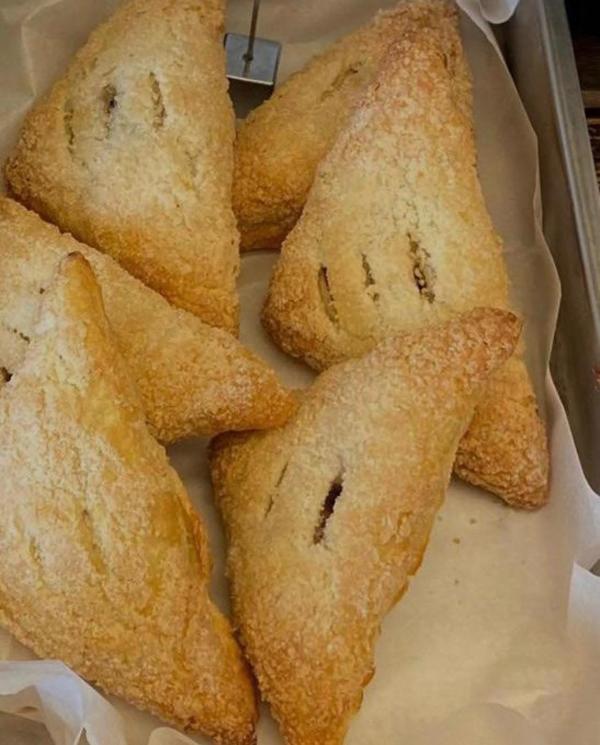
At first glance, you’d be forgiven for thinking that a Coventry God Cake looked like a simple, puff pastry turnover.
But don’t be fooled.
Inside the crisp triangle is a dense, sweet mincemeat filling spiced with cinnamon, nutmeg, and dried fruits. The top is typically scored with three slashes, giving it a rustic, homemade charm.
A slice of Coventry history
The history of the God Cake is notoriously hard to pin down, which only serves to amplify its charm. What we do know is that the origins of the humble God Cake stretch back to at least the 19th century, though some say they may be even older.
Traditionally, they were given by godparents to their godchildren during New Year celebrations, which unsurprisingly earnt them the name ‘God Cake’.
The three-sided shape – along with the three scores on top – are said to represent the Holy Trinity, while the generous filling was symbolic of abundance and good fortune for the year ahead.
Essentially, they were a treat with an important message to impart: you are cherished, and blessings are being wished upon you.
In more religious households, they were also associated with confirmation, baptism and Easter celebrations, again strengthening the connection between the child and their godparent.
The Coventry God Cake’s rise to local fame
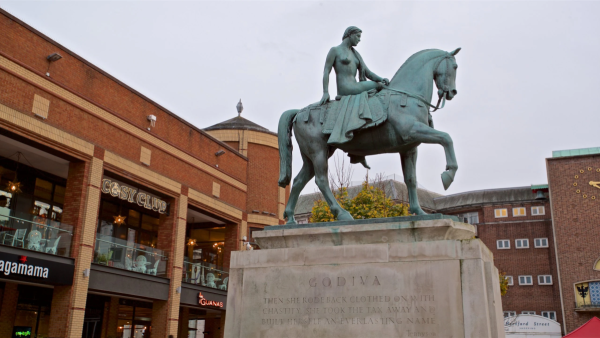
Though once a staple of Coventry’s seasonal celebrations, the God Cake gradually faded from popularity in the 20th century, like many other regional bakes.
But thanks to a handful of passionate food historians and local bakeries in the city, they’ve seen a revival in recent years.
In 2010, a campaign helped bring them back into the spotlight, and now they can be found in certain independent bakeries, and occasionally at local food festivals or heritage events.
Where to try a Coventry God Cake
While still alluringly rare, you may very well be able to sample Coventry’s finest God Cakes at:
- Baxter’s Baristas at Coventry Transport Museum, 16 Hales Street
- Cog’s Bar & Kitchen at Hotel Indigo
A simple Coventry God Cake recipe
Fancy having a go at making your own God Cake? It’s surprisingly simple!
All you need is four basic ingredients:
- Ready-rolled, ready-made puff pastry
- Mincemeat
- Whisked egg white
- Caster sugar
Simply cut your puff pastry into equal squares and place 1 to 2 heaped teaspoons of mincemeat in the middle of each one. Fold them in half diagonally to form a triangular shaped pasty and press the sides together to help them stick.
Brush the top of each triangle with your egg white and sprinkle on caster sugar, before baking them in a pre-heated oven at 220C/200C fan for 12 to 15 minutes.
Once they’re beautifully golden brown and puffed up, they’re ready. Enjoy them warm – and thank us later!
A taste of tradition
You might say that Coventry God Cakes are more than a pastry – they’re part of the region’s living history.
Each triangle carries the warmth of deep family ties, festive wishes, and a flavour of old Coventry that deserves its place on the table once again. And we bet that for many Coventrians, the sight (and smell) of a God Cake sparks instant nostalgia, curiosity, and a glowing pride in their local heritage.
So next time you fancy something sampling something sweet with a side of history, seek out a God Cake. You’ll be (almost literally) biting into a piece of Coventry’s past – one that still has a place in our hearts and kitchens today.